
Food label software for food manufacturers
Food label software is not one category. Some tools calculate nutrition, some design artwork and some manage printing. Food manufacturers also need the QA and compliance layer behind the label: recipe data, supplier specifications, allergens, QUID, market requirements, changes and documented approval.
What is the best software for creating food labels?
The best choice depends on the job. Design software is best for artwork, nutrition tools are best for nutrition panels, and print systems are best for label output. Manufacturers that need controlled product data, multi-market declarations, supplier evidence, change impact and QA approval need a compliance workflow around the label. FoodQA is built for that layer.
Four different jobs are often called “food label software”
A search for food label software mixes together tools that solve very different problems. Choosing the right category first makes the evaluation much easier.
| Software type | Best for | FoodQA role |
|---|---|---|
| Nutrition calculation | Nutrition databases, serving sizes and panels | Useful input, but not the whole product record |
| Artwork & packaging design | Layout, typography and print-ready artwork | FoodQA is not design software |
| Label printing & production | Variable data, printers and label output | FoodQA prepares controlled QA information before output |
| Compliance & QA | Recipes, supplier evidence, declarations, markets, approvals and change impact | Core FoodQA workflow |
The compliance work starts before the artwork
A finished label is the end of a chain of decisions. The ingredient list depends on the recipe and supplier specifications. Allergens depend on ingredient composition and cross-contact information. QUID, nutrition, claims, mandatory wording and market requirements can all change the final declaration. FoodQA keeps those inputs connected to the product so QA reviews the basis behind the label rather than treating the artwork as the source of truth.
Use the same product basis across markets
Instead of rebuilding the product for every language or country, FoodQA keeps the recipe and confirmed supplier evidence shared while market-specific wording, requirements and QA decisions remain separate. That makes multi-market label management a controlled review process rather than a collection of copied files.
AI can prepare the work, but QA keeps control
AI is useful for reading specifications, extracting proposed facts, comparing versions and answering questions across the product record. It should not silently approve regulatory decisions. FoodQA keeps the source with the answer and routes important changes and open questions back to QA for confirmation.
Changes should reopen the right work
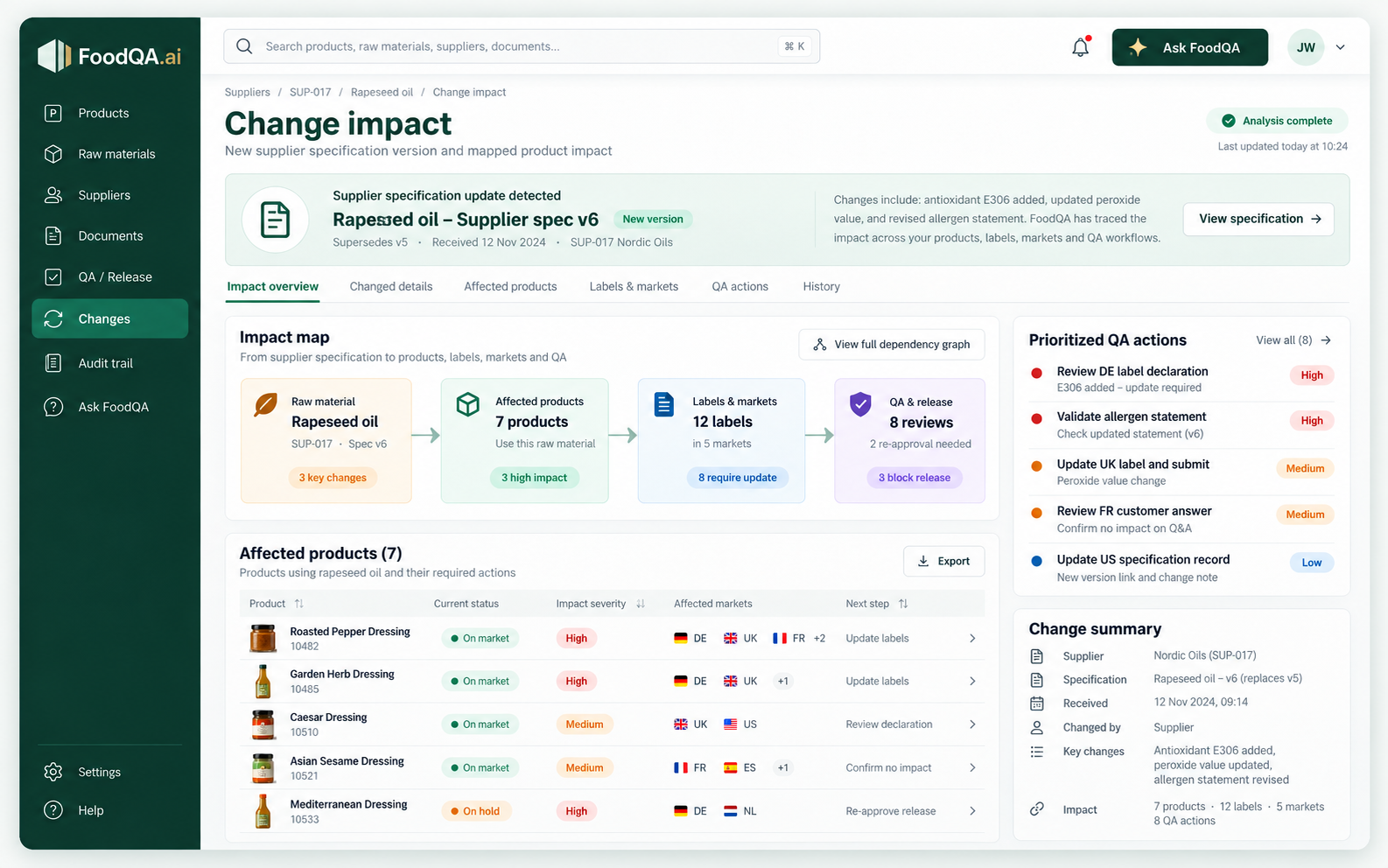
A supplier update, recipe revision, packaging change or new market requirement should not force QA to start from zero. FoodQA traces what changed, which products and declarations depend on it and which review areas need attention.
What should AI food label software actually do?
Useful AI should reduce the manual work around controlled evidence: read supplier documents, extract proposed facts, compare versions, trace the source behind an answer, identify affected products and prepare the next QA action. It should not invent missing evidence or silently approve a regulated declaration. FoodQA uses AI as an evidence-grounded working layer around the product record, with QA confirmation for controlled decisions.
FOODQAFrequently asked questions
What is food label software?
Food label software can refer to nutrition calculation, artwork design, label printing or compliance management. For manufacturers, the compliance layer connects the product recipe, supplier evidence, market rules and QA approval behind the finished label.
What software is used to create food labels?
Different tools handle different parts of the process. Design applications create artwork, nutrition systems calculate panels, printing systems produce labels, and compliance platforms such as FoodQA manage the controlled product data and QA review behind the declaration.
Can AI create food labels?
AI can help extract data, compare specifications, draft declarations and explain findings, but controlled food-label decisions still require verified sources, market rules and responsible QA review.
How do food manufacturers check label compliance?
A robust review checks the recipe, compound ingredients, allergens, additives, QUID, nutrition, claims, packaging information, mandatory wording and target-market requirements against controlled source evidence.
How do supplier changes affect food labels?
A supplier specification change can alter composition, allergen information, origin, additives, nutrition, claims or packaging data. FoodQA maps the changed facts to affected products and market reviews.
How do you manage food labels across multiple countries?
Keep one controlled product basis and create separate market reviews for language and local requirements. Shared evidence stays connected while each market keeps its own approval history.
See FoodQA on a real product
Use one of your products to see how recipes, supplier evidence, markets and QA decisions work together behind the label.